Arse Verse is a sound installation that evokes the soundscape of ancient Etruria, weaving together two dimensions: one historically reconstructed through bibliographic and iconographic sources, and another evoked, imagined.
The project was realized in collaboration with sound archaeology expert Francesco Landucci (Experimental Sound Archaeology), who meticulously reconstructed and played some Etruscan musical instruments.
The work aims to elevate the myth of this ancient civilization by recovering a lost dimension and giving voice to the millennial silence that enveloped this mysterious people.
The title Arse Verse — literally “Keep the fire away” — references a magical formula that the Etruscans, and later the Romans, inscribed on the doors of their homes to protect themselves from misfortune.
Arse Verse was presented at the Archaeological Museum of Bologna from November 9 to 17, 2024, as part of the Art Beats festival.
Arse Verse
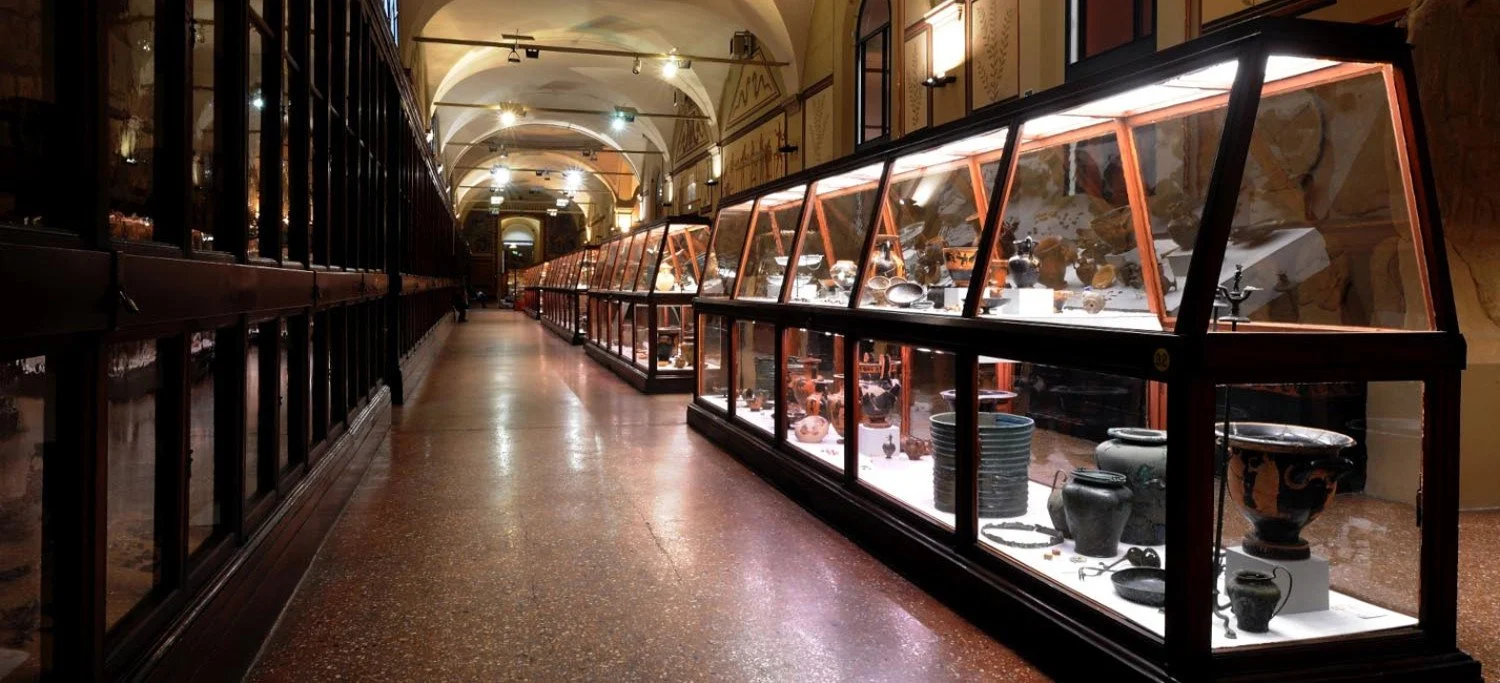
Archaeological Museum of Bologna, Etruscan Room
References in the Title
The title contains multiple references, which we will explore in more detail later: from apotropaic elements to those of destruction and sacredness, evoking fire also as a symbol of distancing from oblivion and the erasure of memory. The fire mentioned in the title also alludes to death, as cremation was a widely practiced custom in Etruscan civilization, much more common than inhumation. This practice is attested by the considerable number of cinerary urns found in the Etruria region.
Historical Research
This distant and elusive world, due to the lack of direct historical documentation and the uniqueness of its epigraphic relics, is the focus of Arse Verse, a sound installation that investigates the Etruscan soundscape, placing it in dialogue with the artifacts of the Archaeological Museum of Bologna and reflecting on general aspects of Etruscan civilization.
The scarcity of direct documentation guided the historical research underlying the project toward an iconographic approach, aimed at an accurate, and as far as possible, scientific, reconstruction of the soundscape. A particularly significant dialogue was developed around the Situla della Certosa, one of the most important artifacts both in the large Etruscan hall and in the museum as a whole.
The choice of this artifact is linked to its intrinsic narrative value: a sort of archaic poem in images, articulated in multiple scenes, similar to the fresco cycles of the Middle Ages.
Dated to the 6th century BCE, the Situla guided the sound reconstruction. The project, in fact, tends to use sound materials consistent with this historical period of ancient Etruria. The representation engraved on the Situla della Certosa, as we will see later, seems to evoke an apotropaic ritual, intended to repel malevolent influences — a key concept for the entire work, also echoed in the title of the installation.
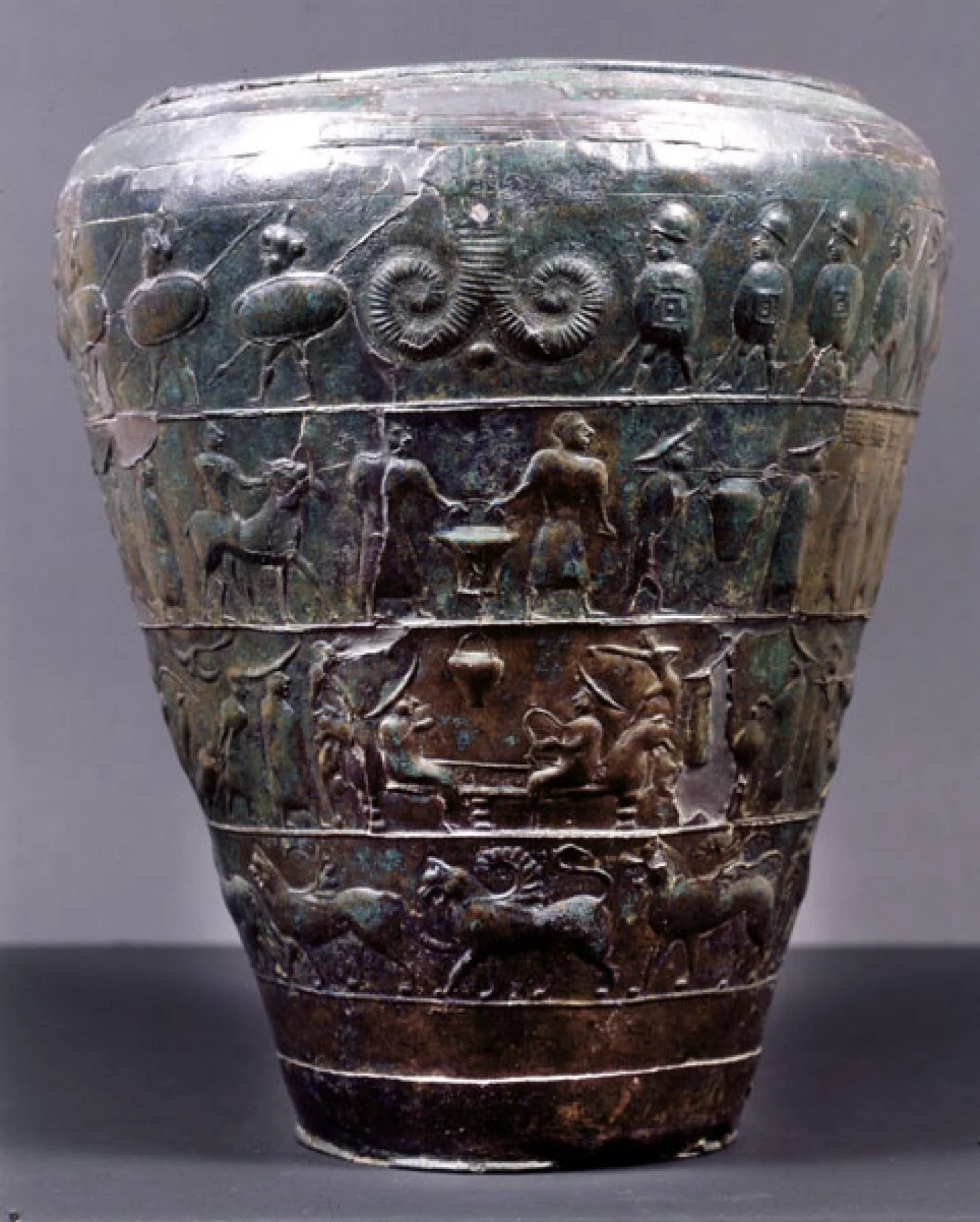
Situla della Certosa
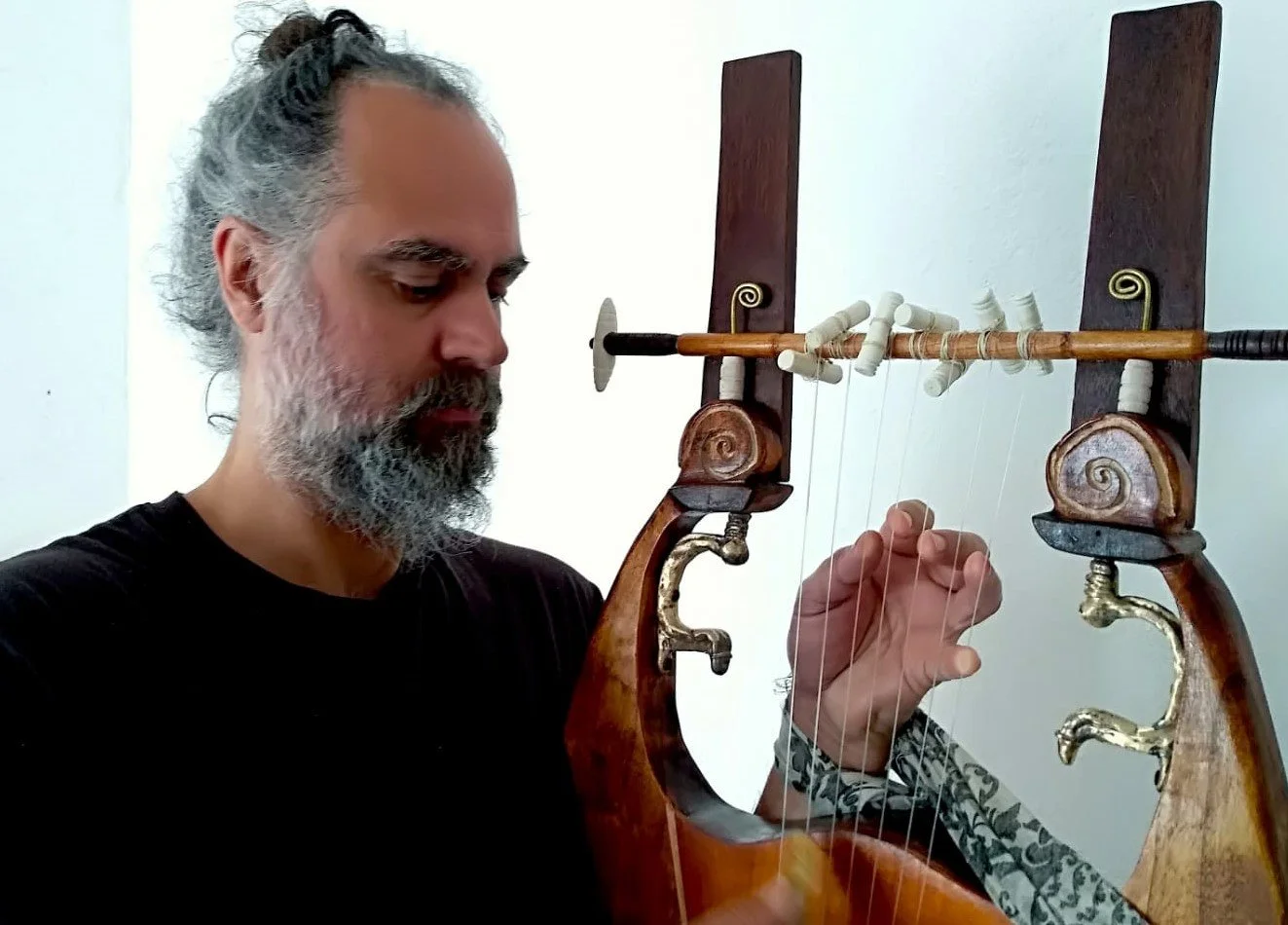
Francesco Landucci